Creative Commons License

Unless otherwise noted all original material on this website is licensed under a Creative Commons license.

Thoughts, reflections, news, and musings from a veteran Silicon Valley journalist and commentator.

August 25, 2010

Jon Stewart Takes On the Fox News Smear Machine

Jon Stewart is our modern Will Rogers. He should have a medal pinned on his chest. In this short segment, he illuminates the use of the classic guilt by association smear tactic so often employed by Fox News:


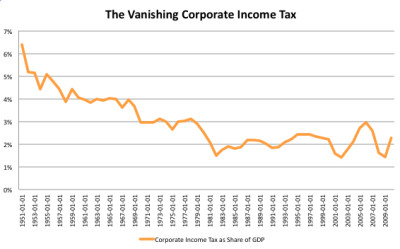
The Truth About U.S. vs. Foreign Corporate Tax Rates

Few things upset me more than the free pass many media outlets give to people who say things that are just not true. In many cases, these untruths often serve some larger purpose for their purveyors. Savvy CEO's, for example, have often stampeded public agencies into decisions that fatten corporate coffers but are otherwise deeply unwise, in some cases, even catastrophic. And we all know how fear and dishonest arguments are used in Washington. Misguiding the public about real rates of corporate taxation, as Intel CEO Paul Otellini and California GOP U.S. Senate Candidate Carly Fiorina do in this article, is today's case in point:

..."If our tax rate approached that of the rest of the world, corporations would have an incentive to invest here," [Intel CEO Paul] Otellini said. But instead, it's the second highest in the industrialized world, making the United States a less attractive place to invest -- and create jobs -- than places in Europe and Asia that are "clamoring" for Intel's business. The comments from Intel's chief executive echoed statements made a day earlier by Carly Fiorina, the former HP CEO turned Republican Senate candidate..."Our corporate tax rates are the second highest in the world," and Congress has repeatedly failed to make an R&D tax credit permanent, Fiorina told the Aspen audience. It's time to start "acknowledging the reality that companies go where they're welcome," she said. (The effective U.S. corporate income tax is 35 percent, far over the industrialized-nation average of 18.2 percent.)

And here is the truth (as if that matters anymore), from today's New York Times:

The current corporate rate of 35 percent is higher than that in many other developed countries. But Congress has larded the code with so many deductions and loopholes -- including a dollar-for-dollar credit for taxes paid to foreign governments and generous deductions for depreciation and debt financing -- that the effective rate paid by most companies is below 22 percent, lower than in most developed countries.

So, what happens to Democracy when disinformation like this becomes the currency of the realm? Oh, how I wish more reporters would ask the tough questions required to reveal the unhuckstered truth.

March 15, 2010

Harris Mankin (aka Harry Boswell), RIP

My old friend, mentor and former colleague, Harris Mankin, passed away recently. You may have known him by another name (see the list and obit below, courtesy of Brian Rhea). Harry would have wanted his obit published far and wide. He was somebody. The world is a smaller and less interesting place without him.

He was born Harris Heathcoat Mankin in Queens, New York on March 7th 1942. He grew up in Sunnyside, Queens. His father, a Doctor, his loving and pampering mother a housewife. Educated in the New York public school system, he attended PS 125 for Junior High and graduated from William Collin Bryan High School, Queens in 1960. Harry's love of creative writing led him to a BA degree in Journalism from Brooklyn College - he really did want to become a newspaper man like one of his Uncles, but it was the radio bug that bit this kid from New York City at a young age. His insatiable appetite for radio was ignited through the great Alan Freed on the #1 station at that time 10-10 WINS! Harry would attend many of Alan's local theater shows but his first taste of "live rock and roll music" was with his boyhood friend Alfred Goldsmith in December of 1955. As young teenagers, they both waited on line to see Alan Freed's Rock and Roll Show at the Paramount Theater that started at high noon - featuring Count Basie, Joe Williams - The Cleftones, The Heartbeats, The Cadillacs, The Crests, The Valentines, The Rems! There was something about these shows - this excitement - this early movement that would consume him. Harry witnessed the birth of Rock and Roll and it's beloved DJ - Mr. Alan Freed - Harry would tape songs off the radio and do intros just the way his idol Alan Freed would do! Radio would never let go of Harry - even in his retirement years, he could been seen wearing big "cans" - his headset radio was most always tuned in to a ballgame or some kind of music station! His first radio job was as a "copy boy" at New York's legendary WOR in 1967. Changing ribbons on the teletype, answering phones and bringing coffee and the newspaper to Mr. John Gambling was quite an influence on Harry. It must have been something be experience part of the Gambling family morning show dynasty that spanned 75 years at WOR. To really be anything in radio - you needed a First Class Radio Telephone FCC license. Harry got his "Chocolate First Phone" license from the Elkins Institute in Chicago in 1968 (they would say, "you memorize the answers and the questions will take care of themselves") he passed on the first attempt and then went to work at WBEE in Harvey, IL 1570AM ... a Chicago suburb. In 1968, Harry got a gig filling in to read morning news at Friendly Frost's WTFM in Queens. Harry worked as Shep Shanley at WLIX on Long Island from late '68 into 1969. In 1969, Harry ventured west for the first time. He inexplicably wound up at 970AM WREO in Ashtabula OH, on Lake Erie. The first air name we know of was Grant Growdy at WPAC late 1969 – 1971. Harry worked at the sister station, WHRF in Riverhead, NY as JJ Flanders. Harry's known Air Names include: Shep Shanley Grant Growdy JJ Flanders Barney Lovesitt Harry Callahan and Harry Boswell - a name he picked with the help of John Libynski a good friend and Top 40 disc jockey in Roswell, New Mexico. He was Harry Callahan on WRCN, Riverhead, NY from 1972 to March 1973. He worked at WVBN - "The Super B" in Utica, Upstate - New York. '73 or '74. Hi did Summer relief fill-ins at WHYN - Springfield, MA in 1973 & 1974 Was Harry Callahan on WNLC, New London, CT in Fall 1974 - 1975. And also Harry Callahan on KNFT, Silver City, NM in Jan 1976 - March 1976 He was in Washington DC at WMOD/WBAL after the Silver City stint and before going to KPEN in Los Altos in February 1977. Harry worked evenings at K-PEN and would sign-off the station at 12midnight. Later the station went 24 hours and Harry was moved to overnights in 1978 where he worked as the “night watchman” for many, many years. Harry Boswell worked at 97.7 KPEN through many ownership and format changes. From fusion Jazz to Beautiful Music and whether pulling an air shift or writing and producing commercials, he was always a hard working and dedicated pro. In 1987 a demo tape appeared on the desk of KFRC program director, Dave Sholin. (little did Dave know that it was a studio tape produced by his friend Brian in the KFRC production room) Spotting his obvious talent, Dave wanted to reach out to Harry for an interview. He was hired immediately and started doing weekends at RKO Radio’s newly minted KFRC Magic 61 in San Francisco. In a few short weeks he moved to his # 1 rated 9am to 1pm shift where worked full time till the early 90’s. Harry was full of radio stories. He had a ear for doing voices and if he loved you or despised you, he could capture your voice, your mannerisms, very easily. He had a "nickname" for everyone. Our name for him was friend, brother and simply, "Boz." Harry passed away in Las Vegas on December 12th 2009 after injuries he sustained from an accidental fall at his home. Today would have been his 68th birthday.

March 07, 2010

Big Ideas Fest Talk on Obama Administration Higher Education Priorities

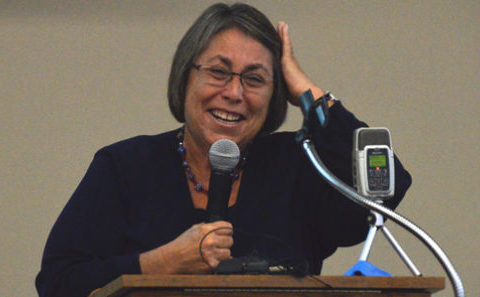
Just learned my recent talk at the annual Big Ideas Fest is now online (and yes, I know I need to lose some weight!)...


March 03, 2010

White House Releases Documents on Proposed Higher Ed Reforms

The White House and the Department of Education recently released several new documents that explain President Obama's proposal to save taxpayers roughly $80 billion dollars over the next ten years by reforming and improving the way federal student loans are made -- and how those savings will be used to both reduce the deficit and enable more Americans to obtain the skills and credentials they need to succeed. You can find copies of them here, here and here.

February 10, 2010

Education Secretary Arne Duncan: Banks vs. Students

Excerpted from today's Washington Post (read the original article here).

Education Secretary Pushes to Revise Student Loan Practices

By Nick Anderson
Washington Post Staff Writer
Wednesday, February 10, 2010; A15

Education Secretary Arne Duncan on Tuesday urged the Senate to overhaul student lending, asserting that the banking industry has had "a free ride from taxpayers for too long" and that executives with lending giant Sallie Mae have enriched themselves as borrowers rack up college debt.

"Working Americans pay while bankers get rich," Duncan said in a prepared statement. "Sallie Mae executives have paid themselves hundreds of millions of dollars in the last decade while teachers, nurses, and scientists -- the backbone of the new economy -- face crushing debt because of runaway college tuition costs."

Duncan's unusually pointed critique marked an escalation in the student loan debate as the Obama administration seeks to end a program that uses private lenders as middlemen for federally backed loans. The tone of the comments echoed President Obama's recent populist rhetoric about the need to expand regulation of Wall Street.

In September, the Democratic-led House passed a bill, over strong industry and Republican opposition, that would mandate a switch to direct government lending. It would steer an estimated $80 billion in savings over the next decade to grants for needy students and other education initiatives. But the bill has stalled in the Senate as the Democratic majority seeks to circumvent a virtually certain Republican filibuster.

Opponents depict the bill as a government takeover that would squelch competition, diminish services to students and cost jobs. Sallie Mae, based in Reston, and other industry players are pushing an alternative that they say also would end government subsidies but preserve a role for private lenders in originating student loans.

John F. Remondi, Sallie Mae's chief financial officer, said the lender shares Obama's reform goals but wants to "enhance" the House-passed bill. Asked about Duncan's comments, Remondi said: "Look, we don't think name-calling helps in this process. The design of the future of this program should be debated fairly and openly."

Sallie Mae estimates that its workforce would be cut from 8,500 to 6,000 if the House bill becomes law. The company said it is funding a radio advertisement in Indiana and Pennsylvania, which are home to some of its facilities, to raise questions about potential job losses under the bill.

Duncan blasted such ads.

"We want the American public to have full knowledge of what's happening here, the reality," he said in a telephone interview. Private lenders "have had a very sweet deal. . . . Our proposal is infinitely better for middle-class, working-class Americans."

The federal student loan program, designed to provide a secure source of college funds for young borrowers, is more than 40 years old. Since the early 1990s, colleges have been able to choose between direct government lending and private lending with a government guarantee against default.

Private lenders have a larger share of the market, but in recent months many colleges have migrated toward direct lending. As of Dec. 31, the Education Department reported $30.9 billion in direct loans originated for the current school year, up from $19.2 billion the year before -- a 61 percent increase. Federally guaranteed loan volume rose 6 percent in that time, the department reported, to $53.1 billion.

Sen. Tom Harkin (D-Iowa), chairman of the Health, Education, Labor and Pensions Committee, has not introduced his version of the measure passed by the House but has said he plans to move a bill "early this year." Some Democrats have raised questions about the bill, even though most appear to support its broad goals.

Sen. Robert P. Casey Jr. (D-Pa.) has not endorsed the House legislation, according to spokesman Larry Smar, and is exploring alternatives. "There's a whole host of things he likes in the underlying bill," Smar said.

Rep. George Miller (D-Calif.), chairman of the House Education and Labor Committee, said, "It's inconceivable to me that the Congress would continue unwarranted subsidies to these lenders."

February 09, 2010

Foothill College Houses Center for Open Educational Resources

Few of us get to see our fondest dreams realized. This announcement, below, represents the culmination of years of effort by a small group of committed individuals who overcame what at times appeared to be insurmountable obstacles to push forward an idea whose time had come. The result promises to make a meaningful contribution to the Open Educational Resources (OER) movement, which is enabling the greatest expansion of access to a high-quality higher education in human history.

This newly-announced initiative is also, I think, a wonderful example of what can be accomplished through public service in a local elected office where ideas can more quickly become actions that lead to change, often far more readily than at the national level. You can read the unedited version of this press release here here.

Free & Open Textbooks at California Community Colleges Supported by New Center

Foothill College Will Manage the Center

February 08, 2010


Faculty at California community colleges now have a centralized source of information about how to use free and open textbooks to lower educational costs for their students. The newly established Open Educational Resources (OER) Center for California will save faculty from spending many frustrating hours on the Internet to find and use high-quality instructional materials on their own.

The California Community Colleges Board of Governors established the center as a statewide pilot program "to provide faculty and staff from community college districts around the state with the information, methods and instructional materials to establish open education resources centers" on their campuses. The pilot program is authorized by Assembly Bill 2261, which was authored by California Assemblyman Ira Ruskin (D-Los Altos) and signed into law in fall 2008.

"I was proud to have carried this bill with the Foothill-De Anza Community College District as the sponsor," Ruskin said. "This legislation helps provide educators and students with free access to course materials available in the public domain. It makes education more affordable and graduation more attainable."

The Open Educational Resources Center for California is committed to aiding educators in the state's 112 community colleges in finding, using and developing the best and most affordable open learning materials to meet the needs of their students, said Judy Baker, Ph.D., director of the center and dean of distance and mediated learning at Foothill College...Baker has worked for the last decade at promoting high-quality open educational resources for use in community colleges, and has emerged as a national leader in the field.

Foothill College is managing the center under an agreement with California Community Colleges Chancellor's Office. The contract started this January and runs through 2012.

"Foothill College was selected to establish the Open Educational Resources Center because it has already done groundbreaking work in this area and is in the best position to make this a success for California," said California Community Colleges Chancellor Jack Scott, Ph.D....These digital learning materials are openly licensed or available in the public domain so that they can be used, shared or customized for classroom and laboratory use.

"There are many creative and dedicated faculty who are writing high-quality textbooks and making them available for anyone to use free of cost," said Foothill College President Judy Miner, Ed.D. "It is particularly exciting to consider the potential for improving instruction in basic skills given the current and future needs in that area."

In addition to affordability, other benefits of OER include the ability to rapidly and regularly update learning content and the convenience of digital delivery.

De Anza College student Maya Kostyuanovsky is one of thousands of community college students who've experienced the benefits of using open educational resources.

When asked about her experience using an open textbook for her statistics class at De Anza last year, Kostyuanovsky said, "I definitely would use more, if they were available. It worked really well for me. It was easy to hop online and do what I needed. There was nothing I couldn't do. And it was great to be able to print what I needed and not have to drag along the whole heavy book."

The Foothill-De Anza Community College District has been a state and national leader in textbook affordability efforts since 2004 when it established a district policy on sustainable learning resources that supports "the creation, use, accessibility and ongoing maintenance of public domain-based learning materials...to augment and/or replace commercially available educational materials, including textbooks where appropriate."

"This news is exactly what our board wanted to see happen when we passed our first-in-the-nation higher education governance policy supporting the creation, use and improvement of learning materials that reside in the public domain," said Hal Plotkin, the former president of the Foothill-De Anza Board of Trustees who initially proposed the public domain policy in 2003. "This is an important step toward modernizing our state-supported academic institutions to better serve students and our society during a time of profound economic stress and difficulty." Plotkin currently serves as the senior policy advisor in the office of U.S. Undersecretary of Education Martha Kanter, Ed.D., former Foothill-De Anza chancellor.

The OER Center for California will partner with the Community College Consortium for Open Educational Resources and the Community College Open Textbook Collaborative to maximize the use of available open teaching and learning resources. Among the available resources are peer reviews of open textbooks and links to more than 400 open textbooks that may be suitable for community college use.

"Use of open educational resources is growing in California community colleges, but there is still a learning curve for faculty, staff and students." Baker said. "The center is prepared to assist them in learning to make effective use of these materials free of charge."

Among the center's immediate plans is to establish an advisory group and develop a professional development course that introduces community college faculty, staff and course developers to open educational resources and how to use, create and produce open materials that can be offered to students in community college classes. The center also will create an OER information repository that will serve as a central source of knowledge about open educational resources in California community colleges, and provide colleges with tools to collect data about use of open educational resources on their campuses. That data will also be reported to the state chancellor's office.

The center's goals dovetail with those of California Governor Arnold Schwarzenegger's digital textbook initiative to evaluate open textbooks for use in California's K-12 public schools, and support similar efforts at the community college level. With 112 colleges and enrollments of 2.9 million students, California's community college system is the largest higher education system in the United States. Some 24 percent of all community college students nationwide are enrolled at a California community college.

Readers of this blog should be aware that this accomplishment would not have been achieved were it not for the wise leadership of then-Foothill-De Anza Community College District Chancellor Martha Kanter, who led and guided these efforts and who currently serves in the Obama administration as Under Secretary of Education. Foothill College President Judy Miner also played an instrumental role in crafting the related FHDA board policy and then helped situate the new center at her college; also deserving credit and thanks are her highly-respected colleagues in the Foothill-De Anza community of scholars; Professor Barbara Illowsky, who provided the first free high-quality learning materials through this center; Dean Judy Baker, who guides the new center with excellence and distinction; and the FHDA board members who supported these new programs: Betsy Bechtel, Paul Fong, Bruce Swenson, Laura Casas-Frier and Andrea Leiderman. Nor would it have been possible without the early and generous support provided by the William and Flora Hewlett Foundation and its visionary OER champions Cathy Casserly, who is currently a Senior Partner at the Carnegie Foundation for the Advancement of Teaching and Learning, and Marshall (Mike) Smith, who ran the Hewlett Foundation's education program before agreeing to become the senior counselor to the Secretary of Education, Arne Duncan.

November 02, 2009

John Fensterwald's New Education Blog

Former San Jose Mercury News editor and columnist John Fensterwald just debuted a new blog that is bound to be worth reading. John was often on the front lines of worthwhile reform efforts and is one of the most knowledgeable journalists/experts in the Bay Area on a wide variety of education issues. You can follow his coverage here. Best of luck, John!

October 22, 2009

D.C. Lobbyists Protest Obama Change in Policy

The White House blog has an exchange of letters you really must read. In the first one, business leaders used to throwing their weight around demand an end to the Obama White House policy that has banned lobbyists from serving on federal boards and commissions. In the second letter, White House ethics lawyer Norman Eisen does a classic job of "speaking truth to power" in another powerful demonstration of the change that is starting to sweep thru Washington. We have a long, long way to go, but after reading this exchange I was reminded again how fortunate I am to be part of President Obama's exceptional team. There is a new direction in this town. With a bit more time, hard work, your prayers and maybe a little luck, we may yet see an America we'd recognize from our dreams. Eisen's remarkable letter is another step in that path.

Short History of OER and Community Colleges

The Berkman Center at Harvard recently posted a nice write up on the early history of Open Education Resources and community colleges. While flattered, the review largely omits the critical role played by many other individuals who gave OER the running start at our community colleges that helped to successfully lift it into national prominence. They include former community college chancellor (and now Under Secretary of Education) Martha Kanter, who conceived and developed the Community College Consortium for Open Education Resources (CCCOER), Foothill College President Judy Miner, who played a critical role in developing the Foothill-De Anza Community College District board policy in support of OER, Dr. Judy Baker, who led the CCCOER to its current success, and De Anza Professor of Statistics Barbara Illowsky, who published the first widely used open textbook designed for community college students. A veritable symphony of talent, in which I am proud to have played my small part. Here is an excerpt:


"Hal Plotkin says he himself deserves some of the blame for the dependency on cost as the key argument. In 1998, when he first started advocating for innovative uses of digital technology in higher education, "cost" was the only demonstrable argument. Only later did he observe how the development of what he originally called "public domain learning materials" was "also about improving the quality of teaching and learning through resource-sharing, collaboration and the more rapid transfer of educational best practices".


It was this realization that led him to campaign for Trustee position on the Board of Foothill-De Anza Community College District (FDHA) in 2003. During the first year of his trusteeship, he drafted and campaigned again, within FDHA, to enact the first college-wide policy offering institutional support to faculty pursuing development or adoption of OER."

You can read the rest here.